
Traditional Loudspeakers vs. Directional Audio
WHAT MAKES AUDIO SPOTLIGHT® TECHNOLOGY DIFFERENT?
THE CHALLENGE OF SOUND CONTROL
Audible sound naturally spreads in all directions. Once introduced into a space, it travels and reflects well beyond its intended target.
That’s the principle behind traditional loudspeakers, which are designed to project audio outward and fill a space. In many environments, that’s exactly what you want.
But in places like museums, retail displays, kiosks, and interactive exhibits, the goal is often much more specific. Instead of filling a room, the need is to deliver audio to a single visitor or a defined area—without adding to the overall noise around it.
Traditional loudspeakers are designed to spread sound. Directional audio is designed to control it.
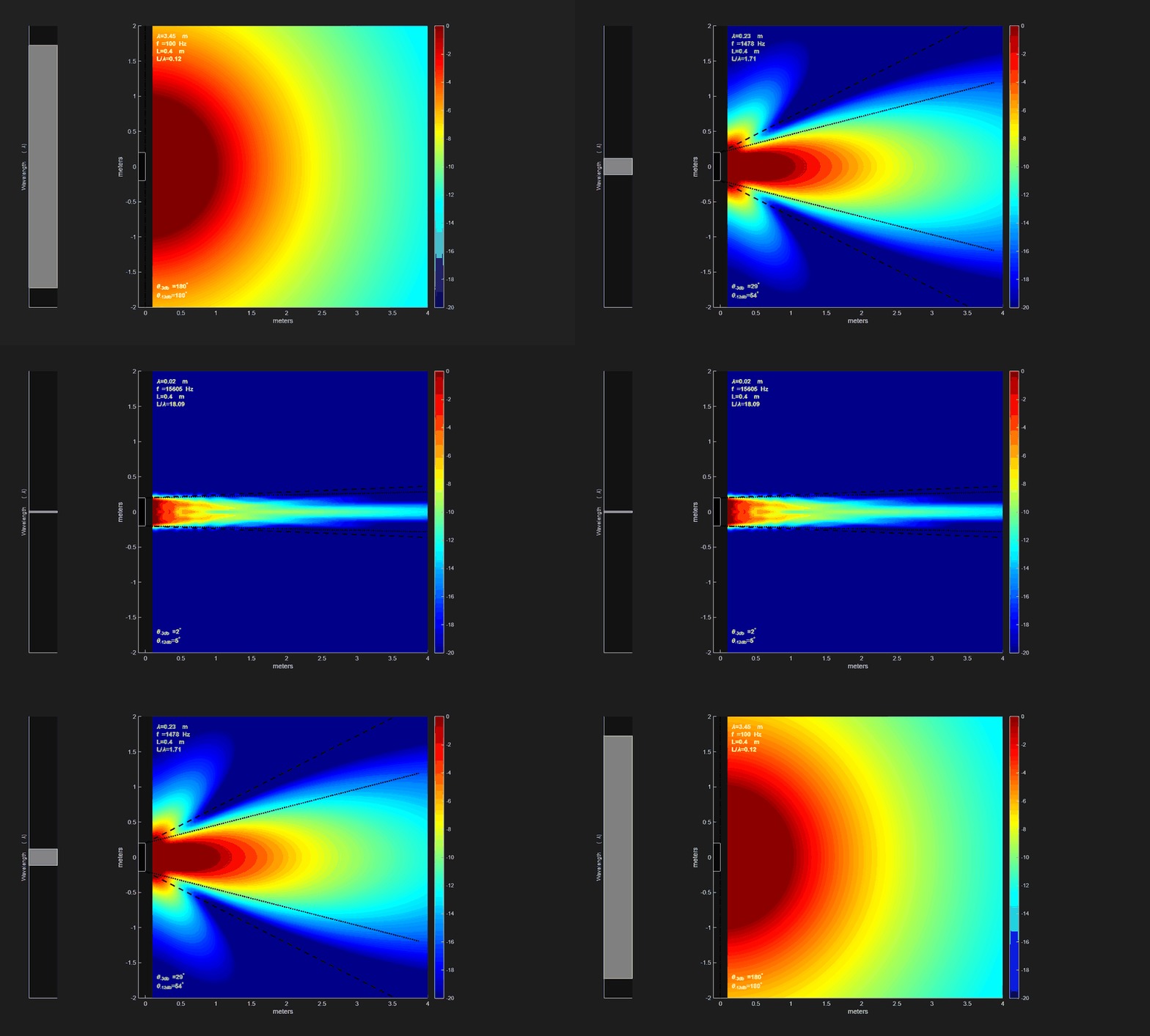
This is where Audio Spotlight® directional audio technology offers a fundamentally different approach.
HOW TRADITIONAL LOUDSPEAKERS WORK
Traditional loudspeakers produce sound by moving air, creating sound waves that radiate outward from the speaker. Even speakers designed to be somewhat “directional” still distribute sound across relatively wide angles—commonly somewhere between about 60 and 180 degrees depending on the design.
Because of this natural spread, audio rarely stays contained. It travels well beyond the intended listening area, and in spaces with multiple audio sources, it can quickly lead to overlap—where different sounds compete and build into general background noise.
To manage this, designers often rely on workarounds such as lowering volume levels, spacing installations farther apart, or introducing physical barriers. These approaches can help, but they don’t change the underlying behavior.
Traditional loudspeakers are excellent tools when the goal is to broadcast sound broadly, but they are not designed to keep sound confined to a specific location.
HOW AUDIO SPOTLIGHT CREATES DIRECTIONAL SOUND
Audio Spotlight takes a completely different approach. Instead of projecting audible sound outward like a conventional speaker, it uses ultrasonic energy to create a narrow, focused beam of audio.
As the ultrasonic signal travels through the air, it produces audible sound within that beam. The result is a highly controlled listening area—clear and intelligible for someone standing within it, while just outside the beam the sound drops off quickly, often by 20 dB or more.

The experience is often compared to standing in a beam of light: you’re either in it, or you’re not.
This level of precision allows sound to be delivered exactly where it’s needed without spilling into the surrounding environment. Multiple Audio Spotlight units can also operate in close proximity without interfering with one another, enabling tightly controlled audio zones within the same space.
Audio Spotlight speakers are designed to support this flexibility, with slim, flat-panel form factors that can be mounted cleanly overhead or integrated into displays, blending naturally into modern environments.
WHY THIS MATTERS IN REAL SPACES
This level of control changes how audio can be used in shared environments.
Instead of competing sound sources, multiple listening zones can exist side by side. A visitor can engage with one display while standing just a few feet away from another, without the two interfering.
It also allows for a more intentional experience. Audio can be tied directly to a moment, a message, or an interaction, rather than becoming part of a constant ambient layer.
That makes a meaningful difference in spaces like museums, retail environments, digital signage installations, corporate lobbies, and control rooms—anywhere audio should enhance the experience without becoming part of the noise floor.
A DIFFERENT TOOL FOR A DIFFERENT GOAL

Traditional loudspeakers are designed to fill spaces with sound.
Audio Spotlight is designed to place sound precisely where it’s needed—and keep it from spilling into surrounding areas.
That level of control makes it possible to create cleaner, more intentional, and more immersive audio experiences in modern shared environments.