Adding Sound to the Banking Experience
THE CHALLENGE OF SOUND IN MODERN BANKING
Banking environments are evolving. As financial institutions adopt interactive teller machines (ITMs), self-service kiosks, and digital interfaces, the in-branch experience is becoming more flexible and efficient.
But as these technologies become more common, they introduce a new challenge: how to deliver clear, private audio in an open space.
Sound naturally spreads. Traditional loudspeakers are designed to fill an area, which works well for announcements or background audio. In a banking environment, however, that same behavior can create unintended noise and allow sensitive conversations to be overheard.
At the same time, common alternatives like handsets introduce their own drawbacks, including usability, hygiene, and accessibility limitations.
Modern banking environments require a more controlled approach to sound.
THE AUDIO CHALLENGE FOR ITMs AND ATMs
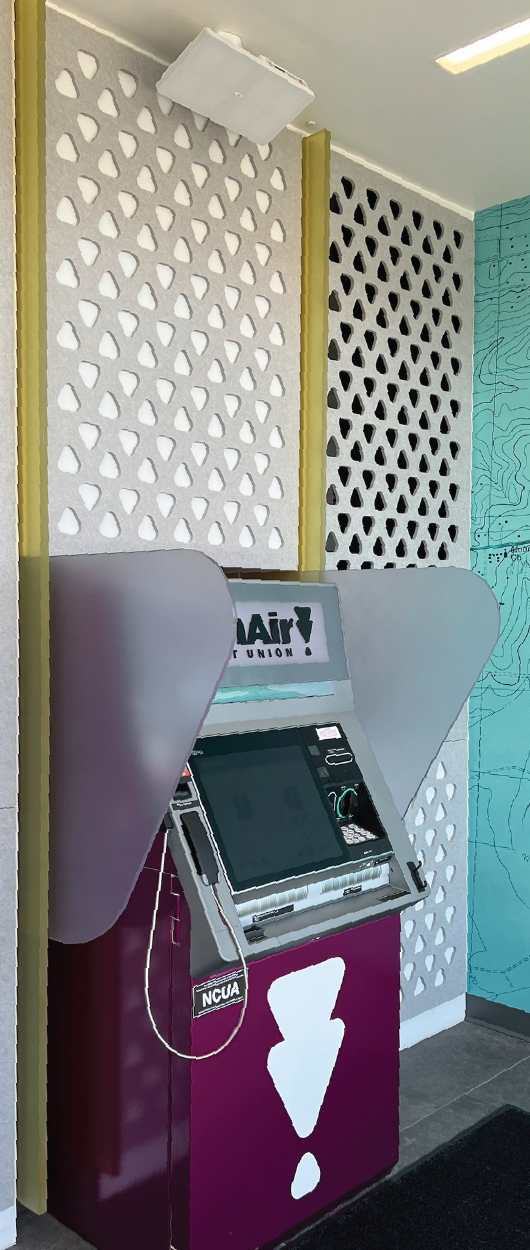
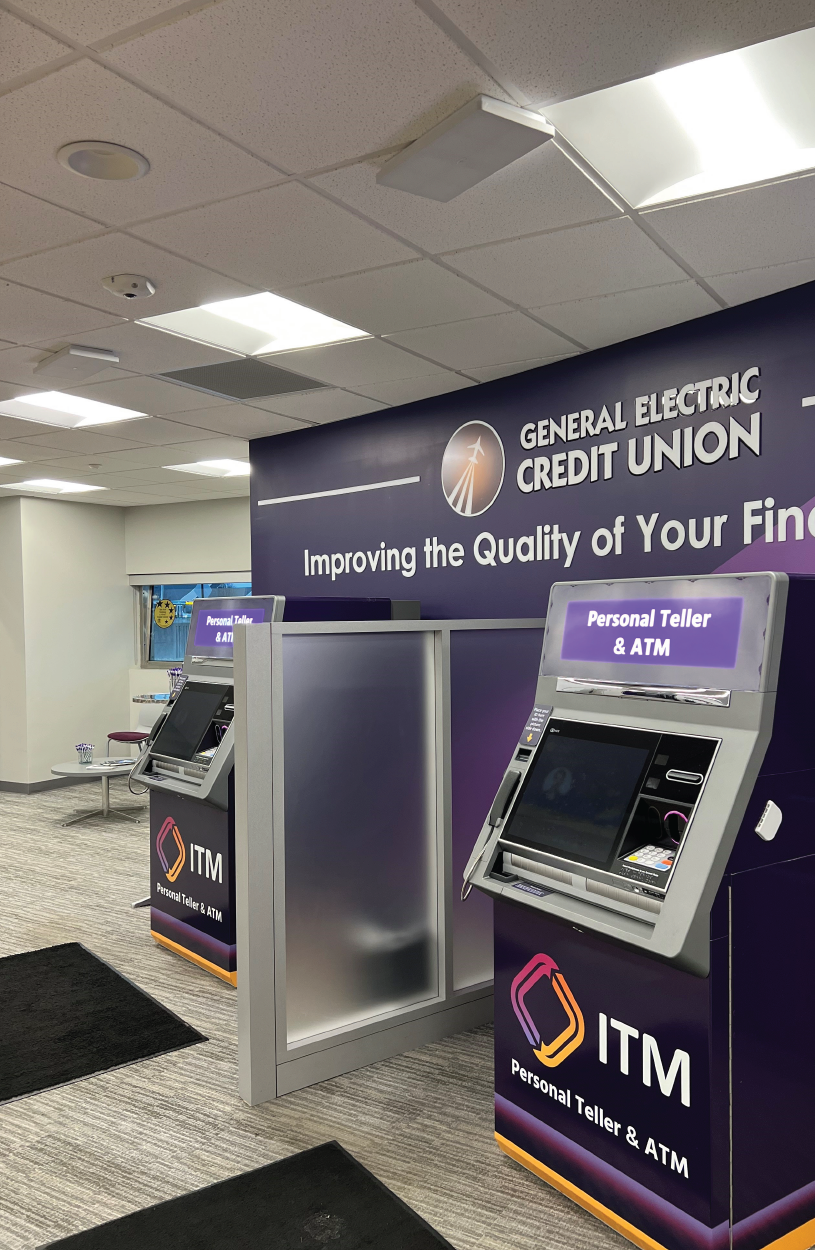
For ITMs in particular, audio plays a critical role. Customers need to communicate clearly with a remote teller, often while standing just a few feet away from other users.
With conventional speakers, sound radiates outward—typically across wide angles, sometimes as large as 180 degrees. In practice, this means conversations don’t stay contained. Multiple machines operating in the same space can lead to overlapping audio, increased ambient noise, and reduced intelligibility.
Privacy is equally important. If customers feel their conversation can be overheard, it can affect both comfort and confidence in the interaction.
Traditional approaches force a tradeoff. Open speakers are convenient but lack discretion, while handsets provide privacy at the cost of usability and accessibility. Neither fully balances clarity and control.
A MORE CONTROLLED APPROACH TO SOUND
Audio Spotlight® technology offers a fundamentally different solution.
Using ultrasonic directional audio, it creates a narrow, focused beam of sound that is delivered directly to the intended listener. As that ultrasonic signal travels through the air, it becomes audible only within that defined path.
The result is a highly localized listening area—clear and intelligible at the user position, while dropping off significantly just outside the beam, often by 20 dB or more.
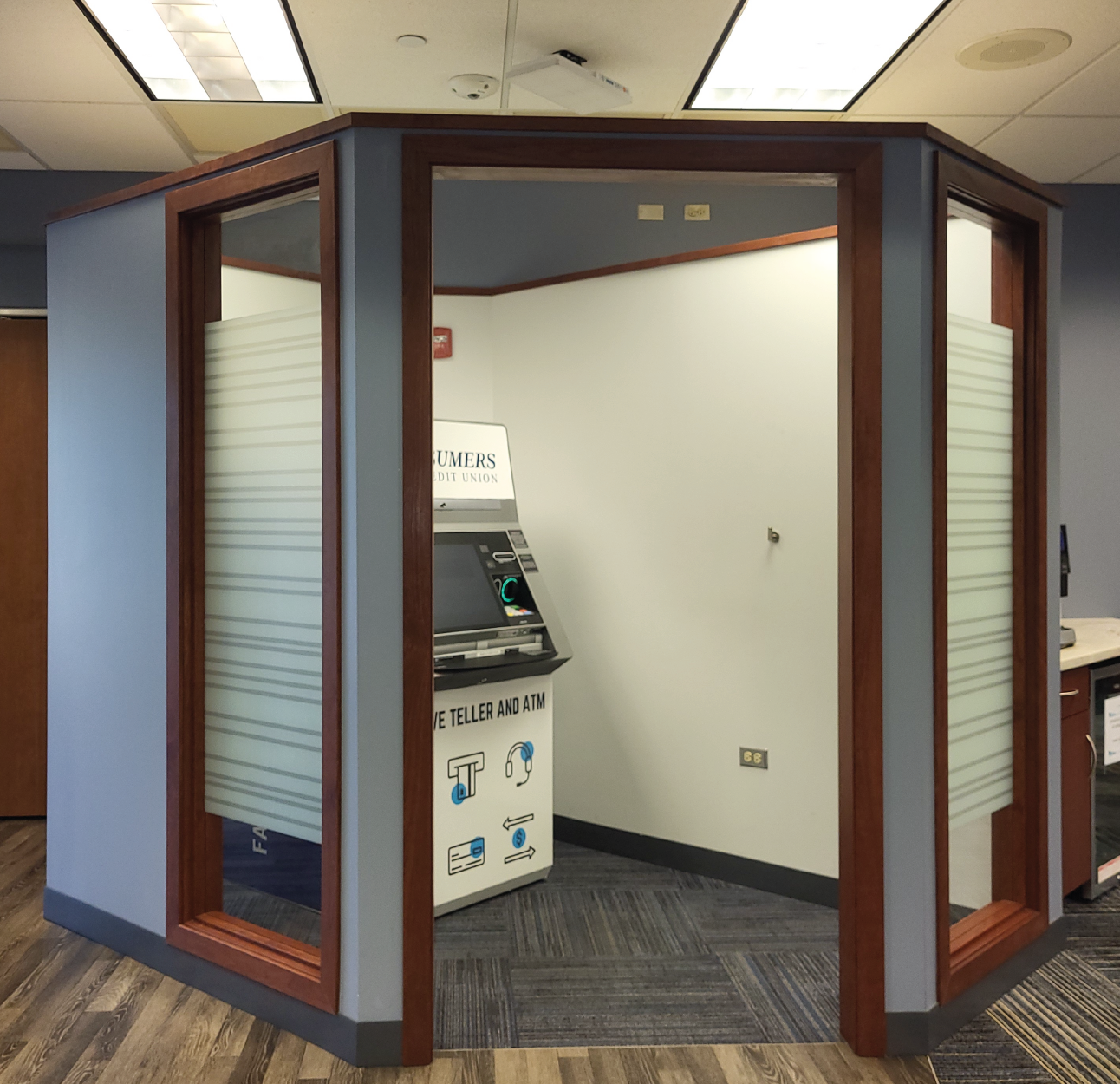
In practice, this allows customers to hear and communicate clearly at an ITM without their conversation carrying into the surrounding space. At the same time, the overall environment remains quieter and more comfortable.
Because Audio Spotlight is completely touchless, it eliminates the need for shared handsets—improving hygiene, simplifying maintenance, and supporting more accessible, user-friendly, ADA-aligned experiences. This also helps enable seamless integration into existing systems without requiring a major redesign.
EXPANDING BEYOND TRANSACTIONS
While ITMs are the most immediate application, directional audio can support a broader range of in-branch experiences.
Digital signage and promotional displays can incorporate sound without adding to overall noise levels, allowing messaging to be delivered to individuals rather than broadcast to the entire space. Interactive kiosks can guide customers with localized audio, even when multiple stations are operating side by side.
In lobby areas, directional audio can introduce branded or informational content without disrupting conversations or daily activity.
In each case, sound becomes more intentional—delivered where it is needed, rather than everywhere at once.
WHY IT MATTERS FOR FINANCIAL INSTITUTIONS
For banks and credit unions, these benefits go beyond technical performance.
Clear, private communication helps build customer trust, particularly during sensitive financial interactions. Reduced ambient noise improves the overall environment for both customers and staff.
At the same time, integrating directional audio reinforces a more modern, technology-forward approach to branch design—one that aligns with the continued shift toward digital and self-service engagement.
SOUND AS PART OF THE CUSTOMER EXPERIENCE
Traditional audio solutions often force a tradeoff between clarity, privacy, and convenience.
Directional audio removes that compromise.
With Audio Spotlight technology, financial institutions can deliver sound precisely where it is needed—creating a quieter, more private, and more effective experience across locations.